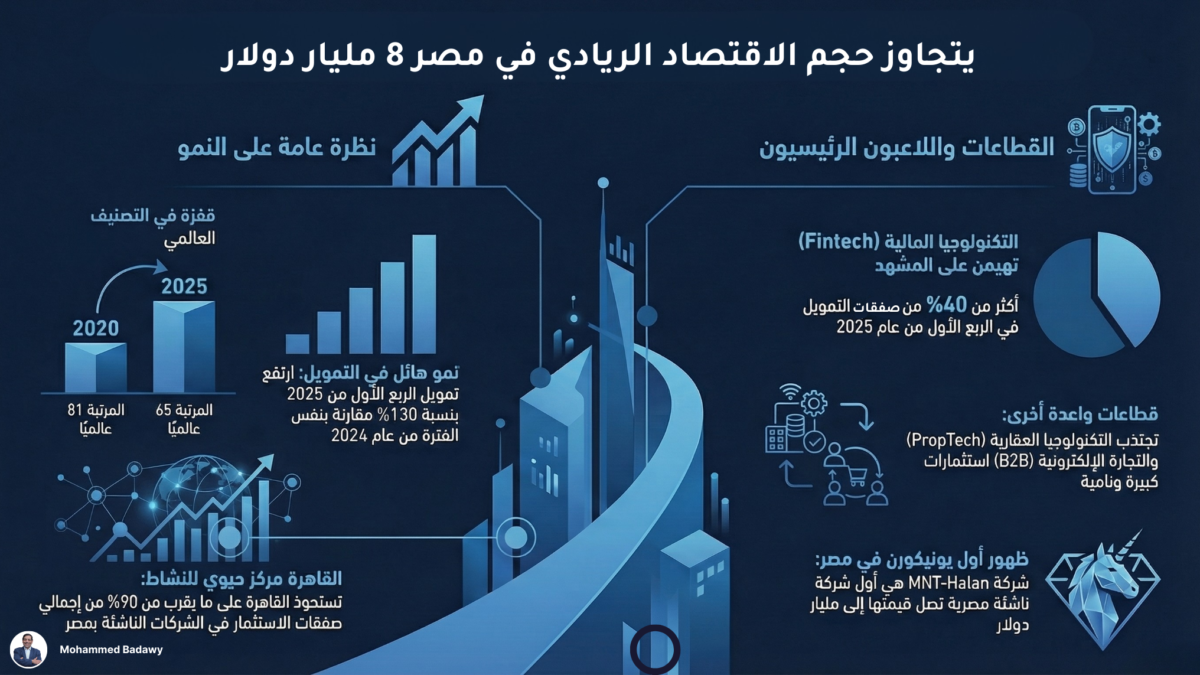
Arabic infographic showing Egypt’s startup economy exceeding $8B, with improved global ranking from 81 (2020) to 65 (2025), Q1 2025 funding up 130% year over year, fintech making up over 40% of deals, Cairo capturing nearly 90% of startup investment, and MNT-Halan highlighted as Egypt’s first unicorn, alongside charts and city skyline visuals.

يتجاوز حجم الاقتصاد الريادي في مصر 8 مليار دولار

من ضغوط الاقتصاد إلى مرحلة “إعادة بناء” حقيقية

على الرغم من استمرار الضغوط الاقتصادية، فإن ما يحدث في مصر اليوم أقرب إلى إعادة بناء المنظومة من جديد، لا مجرد تعافٍ مؤقت. وبرأيي، قد تكون 2026 عامًا مفصليًا: من يبني الآن على أسس صحيحة، سيحصد أفضلية واضحة مع موجة النمو المقبلة.

أين تقف مصر اليوم إقليميًا وعالميًا؟

أصبحت مصر ضمن أكبر ثلاث منظومات تمويل للشركات الناشئة في منطقة الشرق الأوسط وشمال أفريقيا، وتقدمت إلى المركز 65 عالميًا في مؤشر منظومات الشركات الناشئة بعد أن كانت في المركز 81 عام 2020.

كما يتسم المشهد بتمركز شديد في العاصمة:

  • القاهرة تضم نحو 90% من الشركات الناشئة النشطة
  • أكثر من 600 شركة ناشئة (نشطة وقيد التشغيل)
  • ويُقدَّر حجم “الاقتصاد الريادي” بحوالي 8.3 مليارات دولار

هذا التركّز يحمل ميزة واضحة في تجميع رأس المال والمواهب والشبكات في نقطة واحدة، لكنه في الوقت نفسه يكشف فرصة كبيرة لمحافظات أخرى إذا توفرت لها مقومات التمكين.

القطاعات الأكثر تأثيرًا في مصر حاليًا

يمكن تلخيص المشهد في ستة قطاعات تحمل الثقل الأكبر:

  • التقنية المالية FinTech
    لأنها تعالج تحديات الدفع والائتمان والشمول المالي في سوق ضخم واحتياجه واضح.
  • التجارة الإلكترونية E-commerce
    ليس كمتاجر رقمية فقط، بل كبنية تشغيل: سلاسل إمداد، تشغيل، مدفوعات، وتجربة عميل.
  • اللوجستيات والتنقل Logistics & Mobility
    الفرصة هنا لمن يحوّل الفوضى إلى نظام: كفاءة، تتبع، جدولة، وخفض تكلفة.
  • التقنية الصحية HealthTech
    الطلب كبير، والفرص في الخدمات القابلة للتوسع: تشخيص مبكر، متابعة، ورعاية رقمية.
  • التقنية التعليمية EdTech
    سوق واسع، والتحدي الحقيقي هو نموذج ربحي مستدام بعيدًا عن “التمويل المؤقت”.
  • البرمجيات والذكاء الاصطناعي Software & AI
    قد تكون الموجة الأقوى، لكن النجاح ليس في “الذكاء الاصطناعي” كعنوان، بل في منتج يحل مشكلة تشغيلية واضحة ويدخل ميزانيات حقيقية.

التمويل: قفزة كبيرة، ثم تصحيح، ثم عودة تدريجية للتوازن

إذا نظرنا إلى التمويل في صورة كلية:

  • من 2015 إلى 2019: نحو 314 مليون دولار
  • من 2020 حتى اليوم: نحو 2.2 مليار دولار
    أي أن حجم التمويل تضاعف بأكثر من 7 مرات خلال خمس سنوات.

لكن الأهم هو شكل الدورة التمويلية نفسها:

  • 2021 و2022 شهدا طفرة واضحة
  • 2023 و2024 شهدا “تصحيحًا” خصوصًا في الجولات الصغيرة والمتوسطة
  • 2024 كان عامًا انتقاليًا: نحو 300 مليون دولار في 78 صفقة

ثم بدأت مؤشرات التحسن في 2025 بشكل أوضح:
في أول خمسة أشهر فقط، جمعت الشركات الناشئة المصرية نحو 228 مليون دولار في 16 صفقة، بزيادة تقارب 130% مقارنة بالفترة نفسها من 2024، مع صفقات كبيرة مثل:

  • Nawy في قطاع PropTech بنحو 75 مليون دولار
  • وتمويل ديون جديد لـMNT-Halan التي تُعد أول شركة مصرية “يونيكورن”

النمو عاد، لكن بمعايير أكثر صرامة. السوق لم يعد يكافئ “النمو بأي ثمن”.

دعم حكومي: تغييرات تنظيمية قد تعيد رسم قواعد اللعبة

هناك حراك حكومي ملحوظ لدعم الشركات الناشئة، من أبرز ملامحه:

  • تقليل مدة تأسيس الشركة من أكثر من 40 يومًا إلى نحو 11 يومًا
  • إعفاءات ضريبية للشركات التي تقل مبيعاتها عن 20 مليون جنيه
  • إعداد “ميثاق الشركات الناشئة” Startup Charter لتبسيط التعامل مع الجهات الحكومية
  • وفي 2025، تخصيص منطقة حرة تكنولوجية جديدة بمساحة تقارب 9000 متر لدعم شركات الذكاء الاصطناعي والتقنية المالية والبرمجيات

هل هذا كافٍ؟ ليس بعد.
لكن استمرار التنفيذ في هذا الاتجاه يقلل الاحتكاك التشغيلي ويرفع قابلية النمو.

لماذا تبدو 2026 “مختلفة” فعلًا؟

لأنها تبدو سنة فرز حقيقي.
النجاح لن يكون لمن “يجمع جولة تمويل” فقط، بل لمن يستطيع أن:

  • يبني منتجًا يُباع ويستمر
  • يضبط اقتصاديات الوحدة مبكرًا
  • يضع مسار توسع إقليمي واضح
  • يبني حوكمة وامتثالًا من البداية
  • يصنع ميزة تنافسية يصعب نسخها

وبالنسبة للمستثمرين، فالتقييمات أصبحت أكثر واقعية، والسوق بدأ يكافئ الجودة والصلابة التشغيلية بدل الضجيج.

مصر كبوابة للمنطقة: فرصة كبيرة لكنها ليست تلقائية

إذا استمر مسار الإصلاح، ومع استمرار نمو التمويل بالوتيرة الحالية، يمكن لمصر أن تظل:

  • بوابة رئيسية لمنطقة الشرق الأوسط وشمال أفريقيا
  • سوقًا ضخمًا للاختبار والتحقق من المنتج
  • مصدرًا مهمًا للمواهب التقنية

ومع الوقت قد نشهد “يونيكورن” جديدة في قطاعات مثل: PropTech، والتجارة بين الشركات B2B، والتقنية المالية.

السؤال الحقيقي

المشهد يُعاد بناؤه… والفرصة واضحة.

من سيستغل هذه اللحظة لبناء شركات تستطيع أن تنمو وتربح فعليًا على مستوى الإقليم؟

المراجع:

[1] WTO (World Trade Organization) – Egypt | ICT Services Export Promotion (PDF).

https://www.wto.org/english/tratop_e/ts4d_e/case_studies_e/egypt.pdf

[2] StartupBlink – Egypt Startup Ecosystem (Rankings, Startups, Insights).

https://www.startupblink.com/startup-ecosystem/egypt

[3] StartupBlink – Cairo Startup Ecosystem (Rankings, Startups, Insights).

https://www.startupblink.com/startup-ecosystem/cairo-eg

[4] EnterpriseAM – Egypt leads startup activity in Africa in 2024 (Jan 12, 2025).

https://enterpriseam.com/egypt/2025/01/12/egypt-leads-startup-activity-in-africa-in-2024/

[5] Ministry of Planning, Economic Development and International Cooperation (Egypt) – Egyptian Startups Attract $228M (Jan–May 2025) (Jun 1, 2025).

https://www.mped.gov.eg/singlenews?id=6324&lang=en

[6] Wamda – Nawy secures $75 million in equity, debt to fuel MENA expansion (May 12, 2025).

https://www.wamda.com/2025/05/nawy-secures-75-million-equity-debt-fuel-mena-expansion

[7] Reuters – Egypt’s MNT-Halan says Turkish acquisition… (Jul 31, 2024).

https://www.reuters.com/business/finance/egypts-mnt-halan-says-turkish-acquisition-help-expand-consumer-credit-factoring-2024-07-31

[8] The Egyptian Entrepreneurship Sector Diagnostics Report 2023 By Entlaq Holding
https://entlaq.com/reports/2

MENA Startup Investments by Funding Rounds April-May 2025 - Blog

Early-Stage Deal Flow Strengthens

While mega-deals dominate headlines, early-stage activity is accelerating.

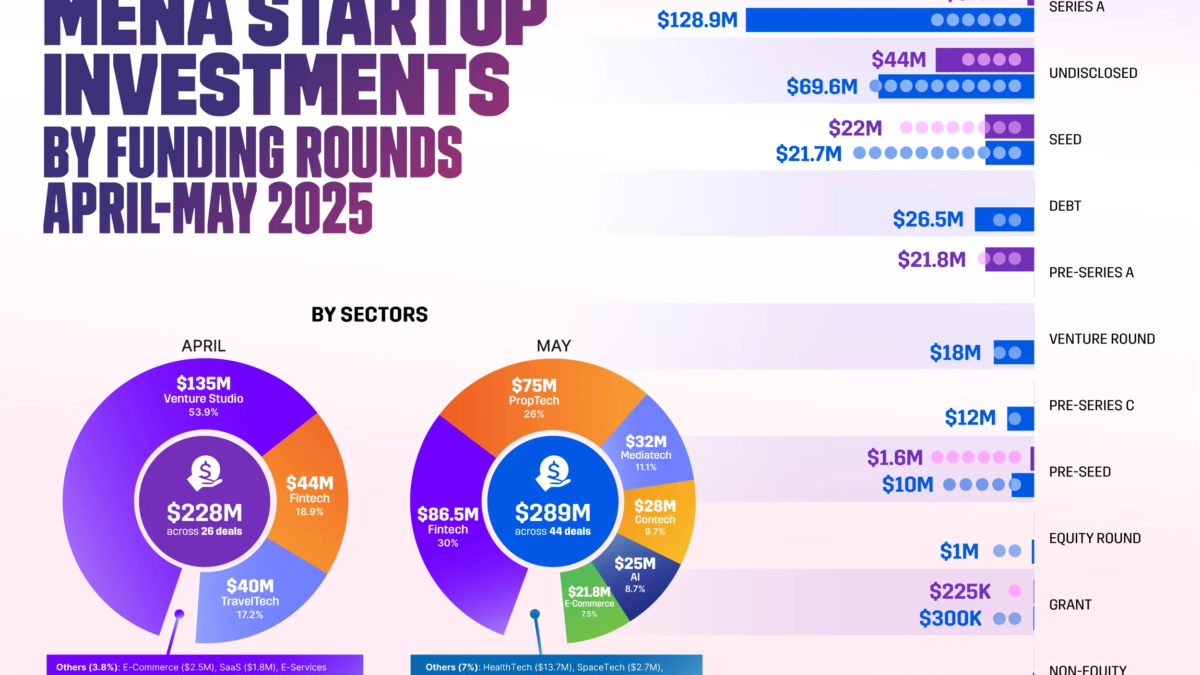
In Q2 2025, early-stage startups recorded 67 deals; across April–May 2025 according to Wamda, MENA startups raised about US$517.4 million in 70 deals across all stages, according to Lucidity Insights.

Investors are backing pipelines over proven scale. That signals confidence in founder quality and market opportunity.​

Saudi Arabia’s early-stage programs: Monsha’at, GAIA, accelerators backed by SVC cumulative impact: 54 SVC-backed funds have invested in over 800 startups and SMEs to date according to Magnitt, reflecting sustained early-stage support.

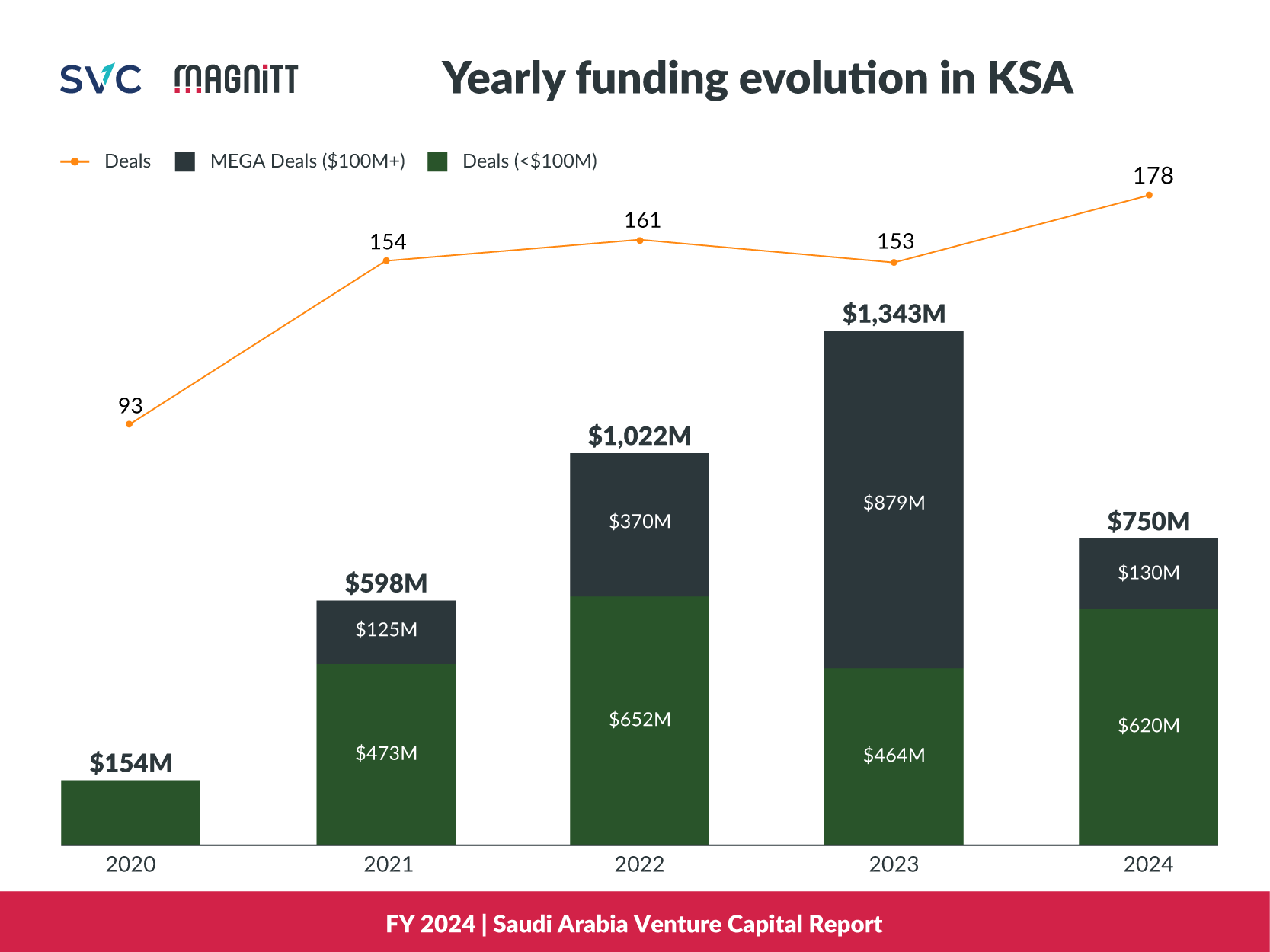
According to Magnitt, Saudi Arabia’s venture market hit a funding peak in 2023 at 1.343 billion dollars, then fell to 750 million dollars in 2024, a drop of about 44 percent. Deal count moved the opposite way, rising to 178 in 2024, the highest in the series. The mix flipped toward smaller checks. In 2024 mega rounds contributed 130 million dollars while rounds under 100 million delivered 620 million dollars, about 83 percent of the total. Compare that with 2023 when mega rounds were 879 million dollars and dominated the year.

That means more deals with fewer headline dollars point to valuation discipline and capital spreading across many seeds and Series A rounds. It suggests a wider pipeline forming now with potential conversion into larger growth rounds over the next couple of years.


Early-stage funding in UAE climbed modestly in 2025, while Egypt topped May (with large rounds lifting totals), indicating resilient early-stage participation despite macro volatility.

The ecosystem is building depth, not just unicorns. More founders, more angel investors, more repeat entrepreneurs create compounding effects over time.​

Early-stage capital availability determines the next cohort of growth-stage companies. MENA’s deal count suggests a healthy pipeline is forming.​

Investors are spreading bets across sectors; fintech, healthtech, logistics, SaaS, climate tech, rather than concentrating in one vertical.​

Founders should prioritize capital efficiency and verifiable traction before Series A, aligning milestones with the more disciplined deployment environment.

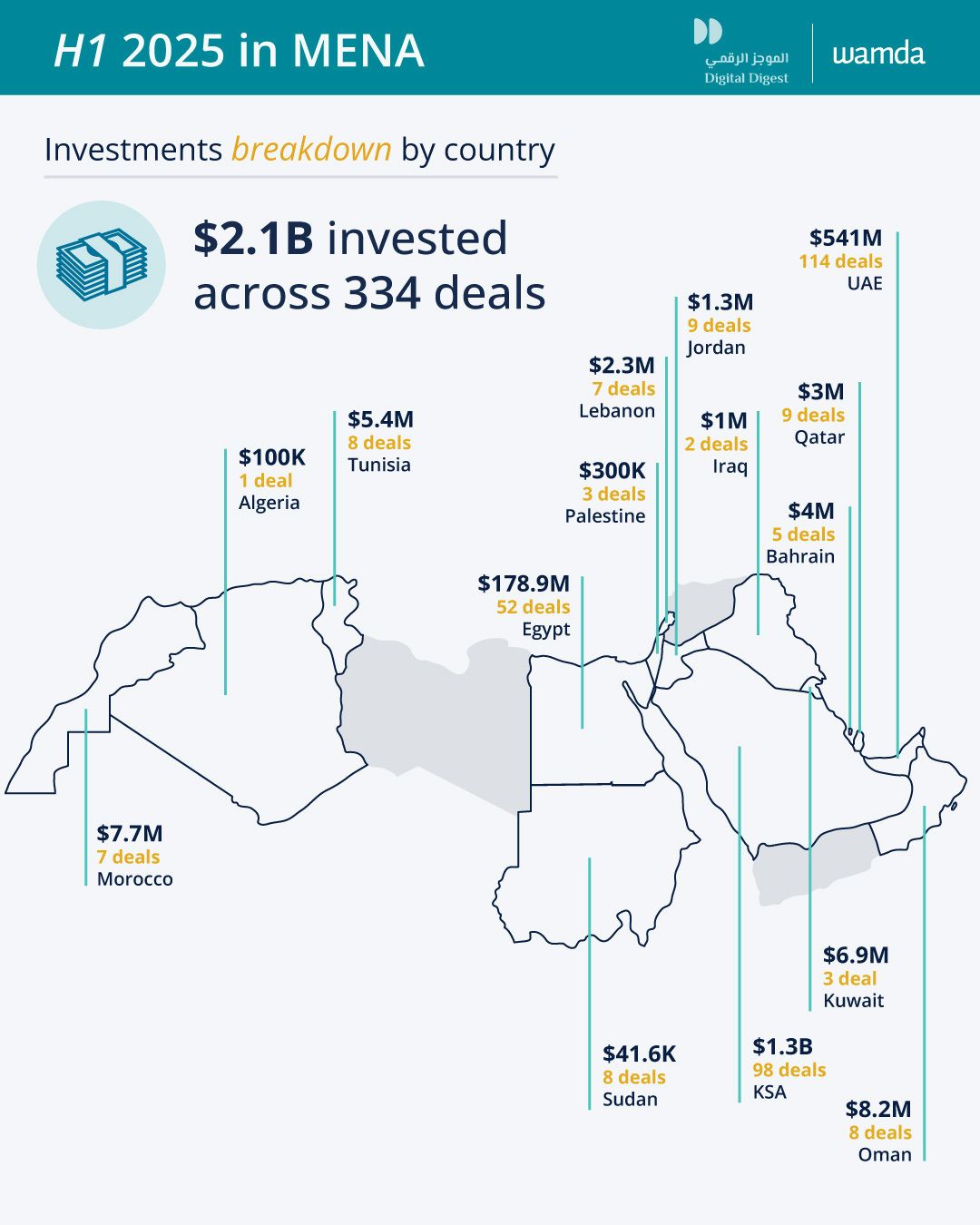
Wamda’s Investment Breakdown by country graph shows that in H1 2025 MENA startups raised 2.1 billion across 334 deals. Saudi Arabia captured 1.3 billion about 62 percent and the UAE 541 million about 26 percent with Egypt at 179 million about 9 percent. By deal count the UAE led with 114 followed by Saudi Arabia with 98 and Egypt with 52 which together made up 79 percent of all deals. Most other markets recorded single digit millions, showing a long tail.

Sources:

Source 1

MENA Startup Funding Hits US$2.1 Billion in H1 2025:
https://fintechnews.ae/27046/fintech/mena-startup-funding-h1-2025

Source 2

MENA Startup Funding: $517M in Apr–May 2025:
https://lucidityinsights.com/infobytes/mena-startup-funding-trends-apr-may-25

Source 3

MENA Startup Funding – In-Depth Analysis & Forecast (Apr–May 2025):
https://lucidityinsights.com/infobytes/mena-startup-funding-apr-may-25

Source 4

Saudi Venture Capital Co. invests $1bn, strengthening the VC landscape (54 funds; 800+ startups/SMEs):
https://www.arabnews.com/node/2589135/business-economy

Source 5

MENA Startups Raise $289M in May as Egypt Leads:
https://fintechnews.ae/26475/fintech/mena-startup-funding-may-2025

Source 6

MENA VC Funding Hits $1.5B in H1 2025, Strongest First Half Since 2022:
https://magnitt.com/news/mena-vc-funding-hits-1-5b-in-h1-2025-strongest-first-half-since-2022-54003

Investment Breakdown by Sector - Blog

Embedded Finance Becomes the Default Path to Scale

Embedded finance is no longer experimental in MENA. It has become the dominant financing model for growth. MAGNiTT data shows fintech attracted $596 million across 93 deals in H1 2025, roughly tripling year-on-year while global fintech funding contracted.​

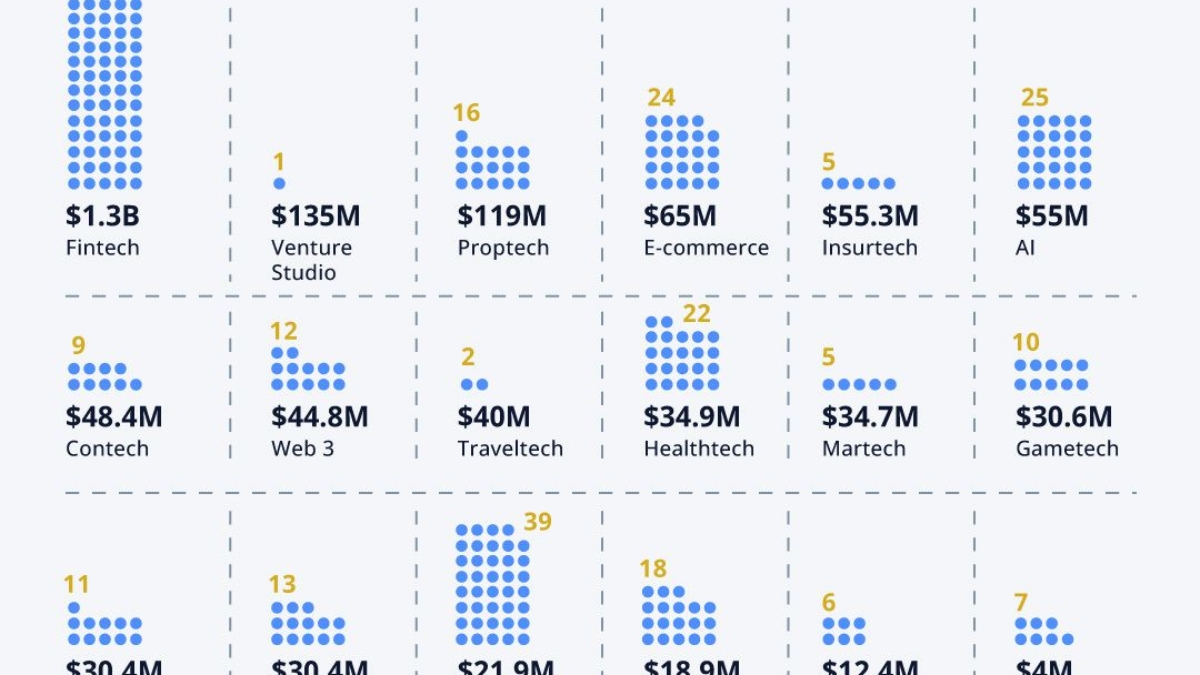
Fintech’s $1.3 billion share of the region’s $2.1 billion total H1 2025 investment, according to Wamda, underscores its centrality to capital deployment across all market stages.

The Saudi Central Bank’s Open Banking framework and the UAE’s Payment Services Regulations now operate as core infrastructure for growth. Builders who align early with these rules move faster, face fewer surprises, and unlock partnerships that last.​

Recent rounds confirm the direction. Tabby raised $160 million in H1 2025, anchoring late-stage fintech growth. Tamara secured a $2.4 billion debt facility, demonstrating that mature platforms can access non-dilutive capital at scale.​

The shift is broader than payments. B2B compliance and operational software gained traction as regulatory mandates expanded; governments became direct buyers of digital solutions, pulling startups into mission-critical workflows.​

Vertical fintech wins when compliance becomes product strength. Buy-now-pay-later platforms that integrate regional payment rails and regulatory requirements (like Sharia-compliance structures in some jurisdictions) build customer trust in ways pure consumer software alone cannot match. That trust compounds into retention and better unit economics.​

Capital follows certainty. In MENA that certainty now exists in payments, lending, and digital wallets. Choose embedded finance over standalone apps. Treat regulatory alignment as core IP. Expand when local banks shift from rival to partner. This is how durable fintech franchises are built in the region today.

Sources:

Source 1

H1 2025 MENA VC Premium Report
https://magnitt.com/research/H1-2025-MENA-VC-Premium-Report-50999

Source 2

MAGNiTT’s H1 2025 MENA FinTech Report
https://www.linkedin.com/posts/philipbahoshy_fintech-mena-venturecapital-activity-7371769504273514496-BkGB

Source 3

Saudi Arabia leads MENA VC rankings with $860m in H1
https://www.arabnews.com/node/2608176/business-economy

Source 4

MENA Startup Funding Hits US$2.1 Billion in H1 2025
https://fintechnews.ae/27046/fintech/mena-startup-funding-h1-2025/

Source 5

MENA VC Funding Hits $1.5B in H1 2025, Strongest First Half Since 2022
https://magnitt.com/news/mena-vc-funding-hits-1-5b-in-h1-2025-strongest-first-half-since-2022-54003